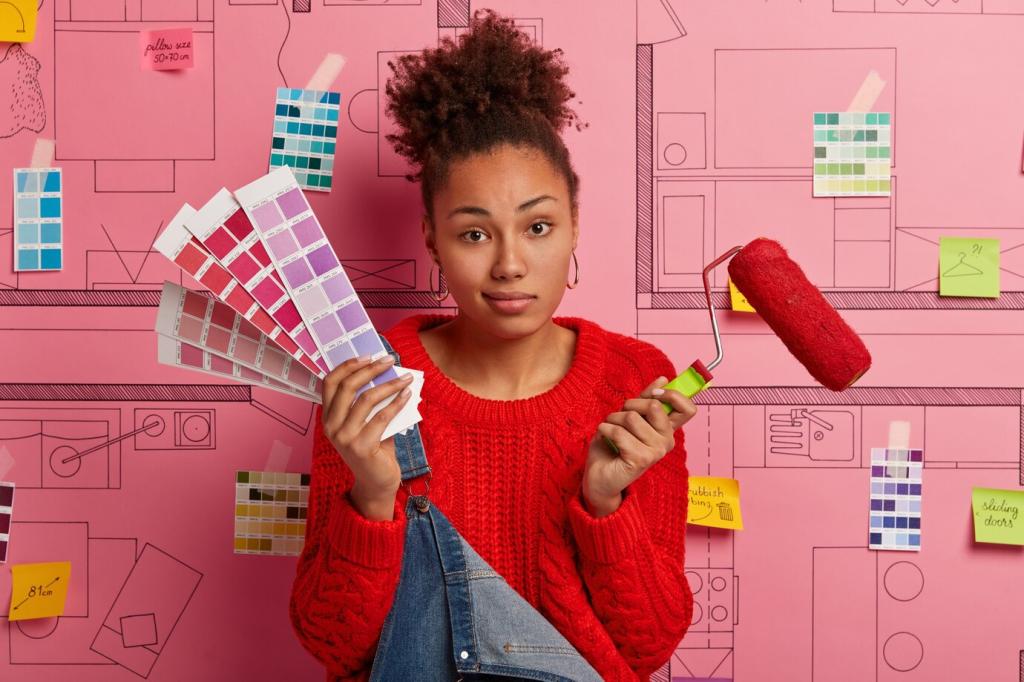
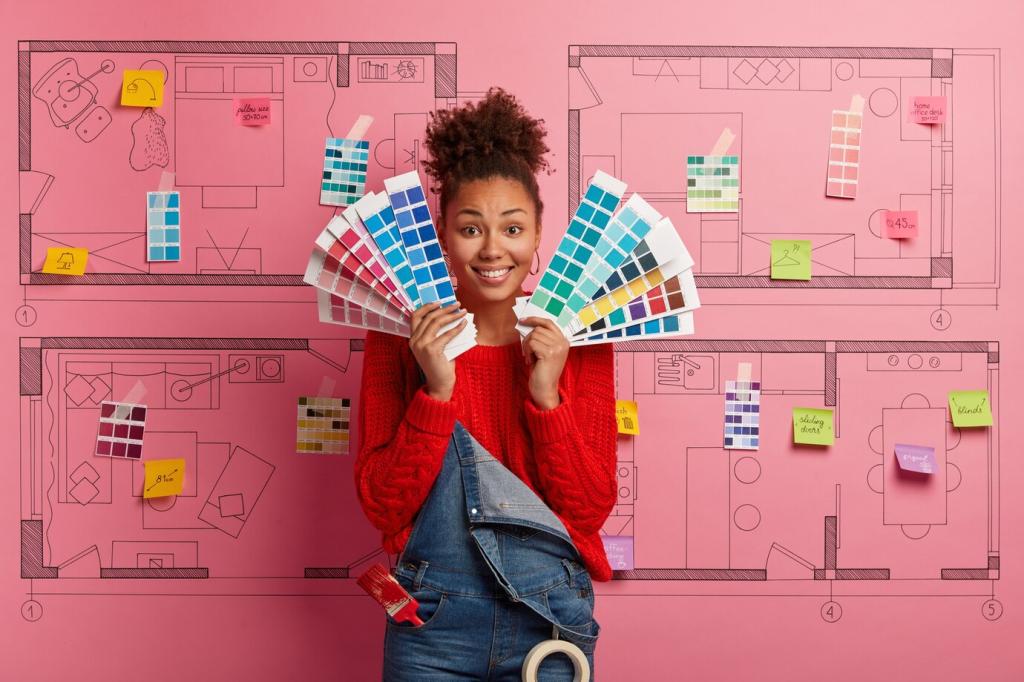
Welcome! Our chosen theme today is “Bold Colors for Small Rooms: A Visual Guide.” Step inside for spirited ideas, real-world stories, and practical tips that prove saturated hues can make compact spaces feel expansive, expressive, and unmistakably yours. Share your color questions and subscribe for fresh palettes every week.
Deep cool colors like indigo can visually recede, while warm hues like coral appear to advance, shaping perceived depth. Strategic contrast along edges sharpens boundaries, helping small rooms read as organized, purposeful, and surprisingly airy.
Emotional Impact in Everyday Living
Bold colors set daily rhythms. A vitamin-rich yellow breakfast nook can energize mornings, while a teal reading corner cues calm focus at night. In compact homes, mood control through color is a genuine lifestyle upgrade.
Case Snapshot: A 240-Square-Foot Studio
One reader painted a single long wall midnight blue, with pale trim and a mustard throw. Guests swore the studio looked larger, and the owner reported sleeping better—proof that bold choices can add tangible comfort.
Building a Confident Palette
Let 60 percent be a soft neutral foundation, 30 percent your hero bold color, and 10 percent a zippy accent. This ratio keeps intensity controlled, ensuring your small room feels lively yet balanced.
Building a Confident Palette
Warm whites soften jewel tones; cool grays clarify sun-drenched brights. Use consistent trim and ceiling colors to anchor sightlines, so a daring wall or upholstery choice looks intentional, not chaotic or impulsive.
Light: The Secret Partner of Saturation
01
North light cools tones; south light warms them. East-facing spaces glow early and flatten later, while west-facing rooms swing golden at dusk. Match your bold color’s undertone to the dominant natural light temperature.
02
Combine ambient, task, and accent lighting with consistent color temperatures. A 2700K bulb can cozy up cobalt, while 3000K crisps fuchsia. Dimmer switches let bold walls shift from lively to intimate on demand.
03
Matte finishes hide wall flaws and soften boldness. Eggshell adds gentle depth without glare. High gloss reflects light dramatically—great for doors or trim—creating sparkling edges that make compact rooms feel dynamic.
Accent Walls That Actually Expand
Paint the farthest wall a bold, cool hue to suggest distance. Wrap the same color around a window return for continuity. The eye reads depth, and your small room gains a quiet, cinematic backdrop.
Color Blocking for Functional Flow
Block a desk niche in forest green, a dining edge in paprika, and the lounge in softened navy. Repeat a unifying stripe along baseboards to connect zones, then invite readers to share their block maps.
Painted Ceilings and Trim Tricks
A slightly darker ceiling can feel like a protective canopy, while color-dipped trim frames views like gallery mats. Thin contrasting lines along door frames sharpen transitions and make tiny thresholds feel deliberate.
Materials, Textures, and Bold Pigments
Fabrics That Tame and Echo Saturation
Velvet deepens jewel tones; linen breathes with brights. Mix one bold patterned textile with two textured solids to steer attention. Share your fabric swatch combos in the comments for crowd-tested fine-tuning.
Pattern Scale: From Micro-Prints to Chunky Stripes
Small rooms favor medium-scale patterns that read clearly from close range. Pair chunky stripes with solid bold walls, or micro-prints with color-drenched upholstery to avoid visual noise and maintain crisp focus.
Sustainable Paints and VOC Truths
Low- or zero-VOC paints reduce odor and off-gassing, crucial in compact homes with limited airflow. Ask for third-party certifications, and test coverage on bold hues to minimize coats, waste, and project fatigue.
Common Mistakes and How to Fix Them
If every surface shouts, add breathing space: a neutral rug, pale drapery, or natural wood. Reduce visual competition so your small room’s strongest color can sing rather than scream for attention.
Common Mistakes and How to Fix Them
A magenta that looks elegant in-store may skew neon under cool LEDs. Match undertones to bulb warmth, and swap lampshades or bulbs before repainting. Share your before-and-after lighting wins to guide others.
Weekend Projects to Try Now
Sand, prime, and finish your interior door in electric blue high gloss. The reflective surface bounces light down hallways, creating a directional beacon that adds personality without stealing precious floor space.
Weekend Projects to Try Now
Paint the back panel of shelves in saturated jade and the sides in softened charcoal. Books glow, clutter recedes, and the nook reads as a purposeful destination. Post your shelf reveals for feedback.